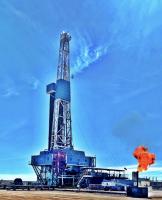
Dubai's economic success is widely known to be attributed to International Investments. Other GCC countries do not have the free trade policies of the UAE and do not allow foreign ownership of land, property or a majority stake in any business venture. The Oil business in the UAE is centered around Abu Dhabi as Abu Dhabi has the majority of the oil within the UAE and is also home to ADNOC the National Oil Company. You will find all the major IOC's in the UAE and that's primarily their regional corporate base that oversee regional activities due to the Free Trade policies. Operationally these companies have very little to do with the Oil & Gas market of the UAE.
Dubai's economy is based primarily on tourism these days as an estimates 50 million people visit the Emirate annually. The Oil money that Dubai does see allows the emirate to subsidize pretty much anything it wants for its citizens, such as Housing, Medical Care, Power, etc.
1: 28 freezones. Areas where businesses pay no corporate taxes, that obviously attract the biggest names in the world, i.e. Microsoft, Honda, Panasonic, Acer, IBM, CNN, Nestle, KBR etc...
Each of these companies need employees. The workers need visas to work. The company pays around 15000 DHS or 3000 EUR for each worker, that is money straight to the government. Now imagine a company needing 200 employees. Those employees live in Dubai, their salary goes towards housing, food, clothing, transport, etc. So a large part of their salary is spent inside the city. While the companies are not taxed, the money they make goes into the government cashdrawer one way or the other anyway.
2: The largest man made port in the world, Jebel Ali Port. Every day, massive ships with hundreds of containers come and go. The UAE has historically benefited from being at the crossroads of 3 continents, Asia, Europe and Africa. It was first a part of the silk route. Then the Portuguese controlled the area after Vasco Da Gama landed here on his way to India. Then the British, for whom Dubai was the most important port en route to India.
3 : Emirates airline, somewhat related to No 2: Because Dubai is so centrally located, it makes sense for the long haul flights to do a stopover in Dubai. Emirates is a huge airline and offers flights from anywhere to anywhere, most of them with a stopover in Dubai. Dubai is a interesting city, and for many people, seeing the tallest building in the world, the biggest shopping mall, the largest man made marina etc, is attractive, so they do a longer stopover and pay for hotels, transport, food, etc while here. Also, Emirates airline is owned by the Dubai royal family.
4: Tourism. You know the saying "build it and they will come"? That's exactly what Dubai has done. From being an unimportant sandy town just 30-40 years ago, it is now one of the most visited cities in the world, and is the city in the world with the highest hotel occupancy on average (89%). There's a man made palm island, the impressive Dubai Marina, Burj Khalifa the worlds tallest building, Dubai Mall and of course the Burj Al Arab. You have beautiful beaches, resorts, gold courses, modern architecture, and amazing vast desert landscapes just 20 minutes outside of the city. For many people, this is a huge attraction. Also, hotels are actually not that expensive in Dubai, and its not an expensive city to visit.
those are the main reasons. And remember, Dubai has almost no oil. Sorry for my previous estimates but Dubai produces 70,000 barrels per day. Denmark produces 230,000 barrels per day in comparison.
Abu Dhabi is the rich emirate with 10% of the worlds known oil reserves and 6% of the worlds known natural gas reserves. Abu Dhabi produces 3.3 million barrels of oil per day. And now, Abu Dhabi is growing at a faster pace than Dubai. Watch this space, as in 15-20 years Abu Dhabi might be the in-city of the region.
By the way, the Airline industry generates 25% of Dubai's GDP







 Reply With Quote

 Originally Posted by Hoggage_54